Do you feel the winter shift toward the greening world? February is a month carrying the promise of Spring. There may still be snow or frost to greet you in the morning, depending on where you are in the world, but as we arrive in February, we are on the other side of winter, steadily sloping towards cold-sweetened dandelions and emerald shoots.
I know many of us are navigating difficult or even painful experiences through the winter, and I urge us all to turn to the plants and natural world for support and nourishment now, so we can meet these challenges more resourced.
February is a renewal and restoration month; it is the Lunar New Year in many countries including Vietnam, Indonesia, Tibet, Malaysia, China and Japan. In Ireland and the British Isles, Imbolc/Imbolg or St. Brigid’s Day, is celebrated as the halfway point between the Winter Solstice and the Spring Equinox.
Imbolc has been celebrated for hundreds of thousands of years and the goddess Brigid/Bríd is honored during this holiday. Bríd is the goddess of fertility, fire, and poetry, and is the keeper of the sacred wells of Ireland. St. Brigid is the Christian saint that is also celebrated this day, and St.Brigid’s Day is a public holiday in Ireland.
Honoring the seasonal transitions with food, the plants, and ritual, is a deep way to connect to the natural world, no matter what your religious or spiritual beliefs. I think of this time of year and month as a season of welcoming back the sun and the slowly warming earth after a long winter. I see the whole month as a time to slowly celebrate when I have the time and bandwidth and I invite you to do the same.
February is a time of abundant citrus and creamy desserts, sunlight captured in the heart of a meal through color, warmth and flavor. Food and eating is reciprocal in that we are sharing in a dance with the plant world and one another.
Food and plants can be some of the strongest threads we have in weaving a connection to ancestors and ancestral lands. Bannocks are especially significant in that sense for me. They are a delicious, unleavened oat bread from Scotland and Ireland, where many of my ancestors came from and where I am named for.
Bannocks have been cooked over fires in the British Isles for hundreds of years, and were made to enjoy at celebrations or holidays such as Imbolc. They are sometimes given as offerings to Brigid, or they may be eaten as a simple breakfast food with tea, similar to a scone.
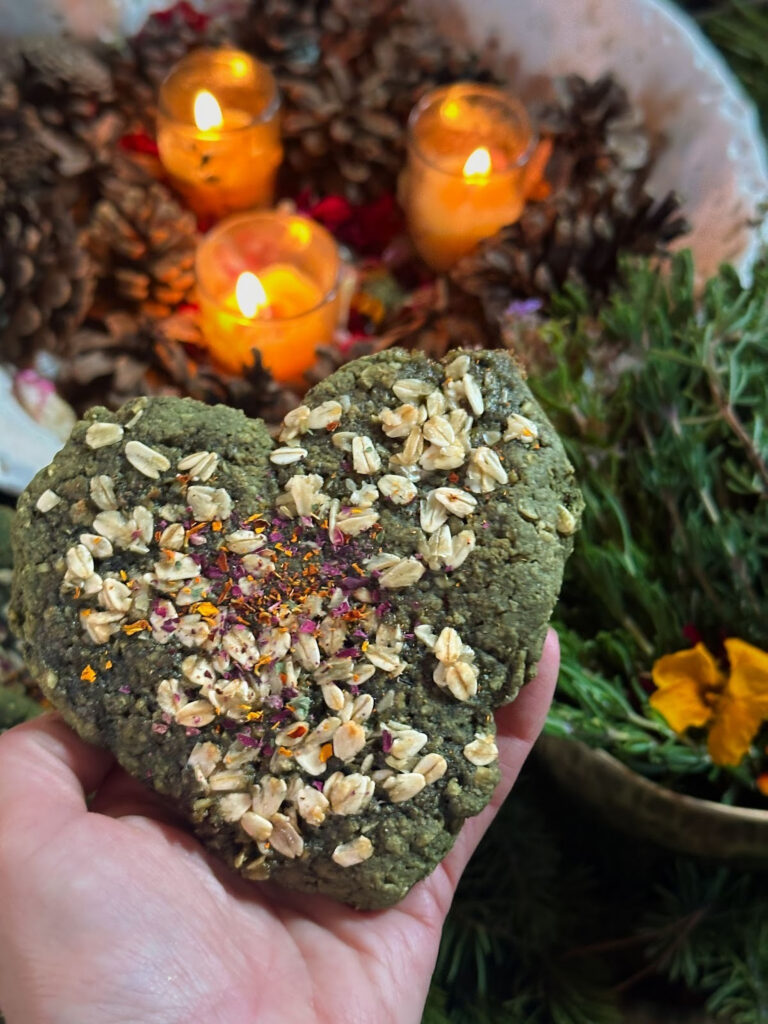
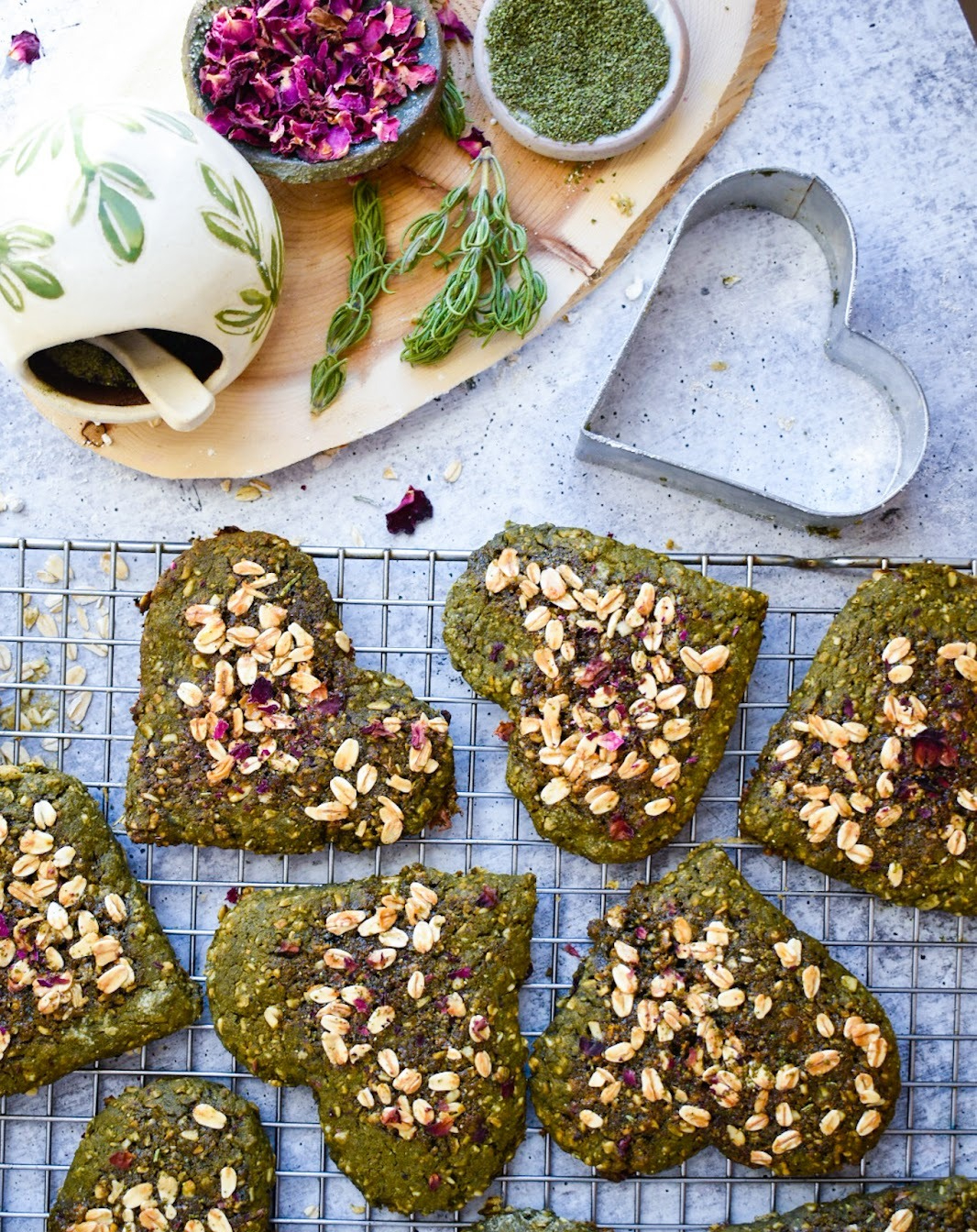
Oats can be a powerful nervous system–soothing plant for the heart and digestion, and make for a hearty meal. I like to bake these as a celebratory food when winter begins to turn toward spring, adding the sweetness of honey, creamy butter and milk, a hint of roses and rosemary, and energizing, green nettles and their seeds.
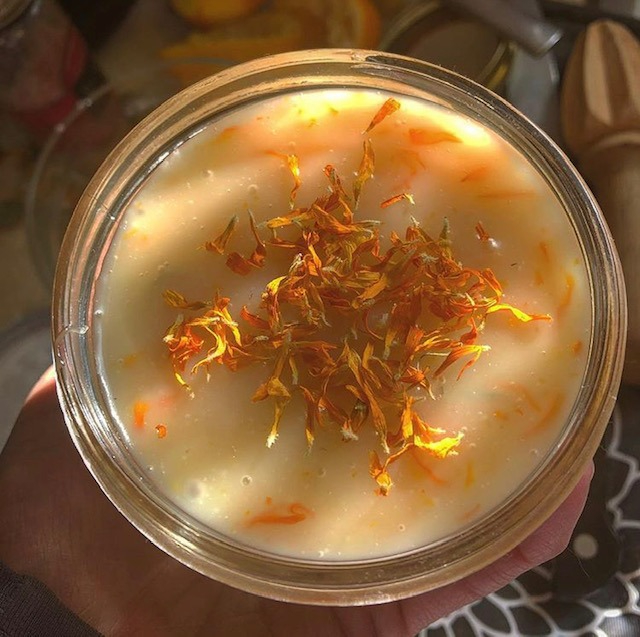
I serve these bannocks with an indulgent spoonful of creamy lemon & calendula curd to re-member the sun and get a strong dose of the fleeting fresh citrus fruits.
Nettle & Rose Oat Bannocks:
Ingredients:
11⁄2 cups sprouted or regular oats,
plus 3 tablespoons for topping
11⁄4 cups oat flour, plus more
for dusting
3⁄4 teaspoon baking soda
2 teaspoons sea salt
1 tablespoon fresh rosemary or diced finely, or 2 teaspoons dried
1/4 cup powdered nettle leaf, large stems removed
1 tablespoon nettle seeds (optional)
2 tablespoons dried rose petals, plus 1 teaspoon for sprinkling on top
8 tablespoons butter of your choice, chopped, plus2 tablespoons for the topping
3/4 cup nearly boiled hot milk of your choice (oat, coconut or dairy) or boiled water
11/2 tablespoons honey, plus 2 tablespoons for topping
2 to 3 dropperfuls of chlorophyll concentrate, to add a brighter green hue (optional)
Directions:
Preheat the oven to 355°F and line a baking sheet with parchment paper.
Combine the 11/2 cups of oats, 11/4 cups of oat flour, baking soda, salt blend or salt, rosemary or thyme, and powdered nettle leaf in a food processor and pulse 30 times. The oats should bebroken up at the end, but still textured.
Transfer the oat mixture to a large bowl and whisk in the 2 tablespoons of rose petals and the nettle seeds (if using).
Add the chopped butter, then pour the hot milk or water on top, stirring quickly until the butter melts into the batter. Stir 11/2 tablespoons of the honey into the batter.
Place a piece of parchment paper on a flat surface and dust generously with oat flour. Scoop the batter onto the parchment and flour as needed until you can spread it out, using your hands, to about 11/2 inches thick.
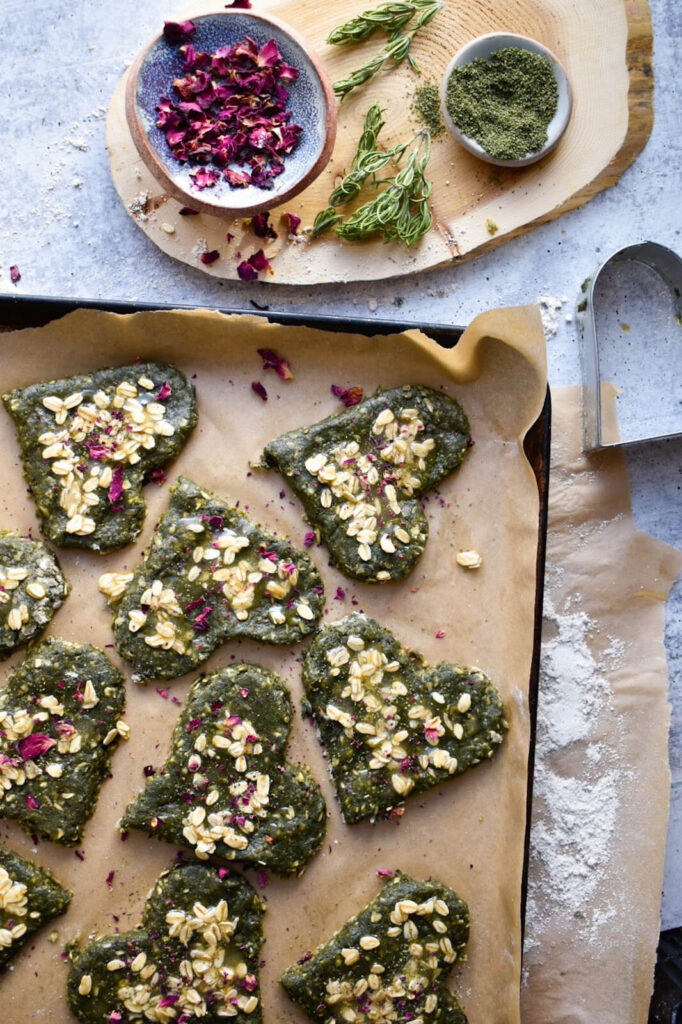
Use a cookie cutter to cut shapes, about 3 inches in diameter, from the dough and place them on the prepared baking sheet.
Bake for about 10 minutes. In the meantime, prepare a butter, honey, and oat topping. (This is optional but delicious.)
Gently heat the remaining 2 tablespoons of butter in a small saucepan over medium heat and stir in the remaining 2 tablespoons of honey.
Turn off the heat and stir in the remaining 3 tablespoons of oats.
After the bannocks have baked for 10 minutes, remove the pan from the oven and spoon a small amount, about 1/2 teaspoon or so, of the honey mixture on each bannock, then place the pan in the oven for an additional 7 to 10 minutes, or until bannocks are beginning to get golden on top.
Remove from the oven and sprinkle with rose petals. Serve right away with a spoonful of citrus curd below and a warm cup of tea.
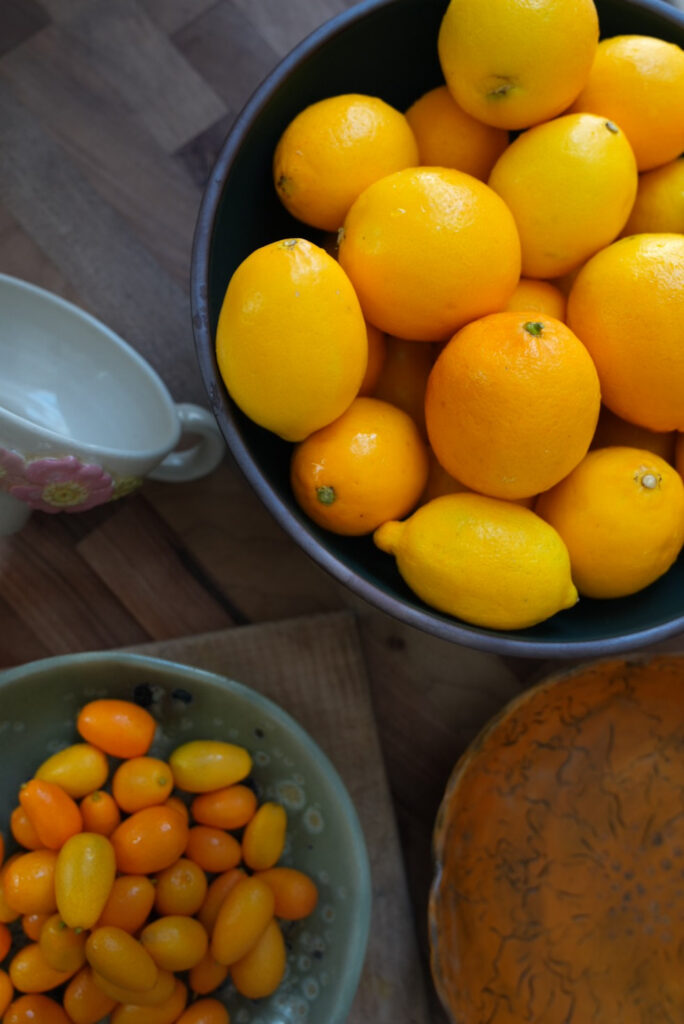
Citrus season is upon us, and so I am absorbed in the sweetness, the tart and floral ways of blood oranges, kumquats, and Meyer lemons along with all the many varieties I never see any other time of the year.
Traditionally, lemon curd was made in England with egg yolks, white sugar, and butter, and so my ingredient list is altered, but the flavors and texture remains.
I am sharing two versions; one has no eggs and an addition of lovely calendula flowers, and it can be easily made to suit any dietary needs and the other is a more classic version but with the added benefits and flavor of spruce.
I think of lemon curd as the perfect February treat, and I originally made this to celebrate Imbolc/Brigid, and creamy, golden dishes of food are a perfect way to celebrate her day and the oncoming spring.
I love to eat these with the bannocks, on toast or on oatmeal.
Without further ado:
Citrus Curd Two Ways:
Egg & Dairy-Free
Ingredients:
1/2 Cup Meyer Lemon Juice (substitute regular lemon juice)
1/2 Cup Honey ( Or agave nectar or cane sugar)
1 Grated Rind of Lemon
1-2 Tablespoons of Calendula Petals (if you don’t have calendula, you can leave it out!)
1/3 Cup Arrowroot Powder
2 Teaspoons Coconut Oil
6 Tablespoons Coconut Cream-the top of the can of a full fat coconut milk will generally do it! (add at the end)
a shake of sea salt
Preparation:
1. Warm honey and juice in a medium saucepan on the stove over low heat.
2. Scoop a couple tablespoons of the mixture into a small bowl with the arrowroot powder to form a liquid paste. Stir until it has no clumps.
3. Once the honey & lemon mixture are heated, quickly whisk the arrowroot mixture into the blend. Turn off the heat as soon as it begins to thicken. Now stir in the calendula, lemon rind and then whisk in the oil and cream.
4. Shake a small amount of sea salt and stir into the blend.
5. Top with a little more calendula.
6. Store in the refrigerator for up to a week.
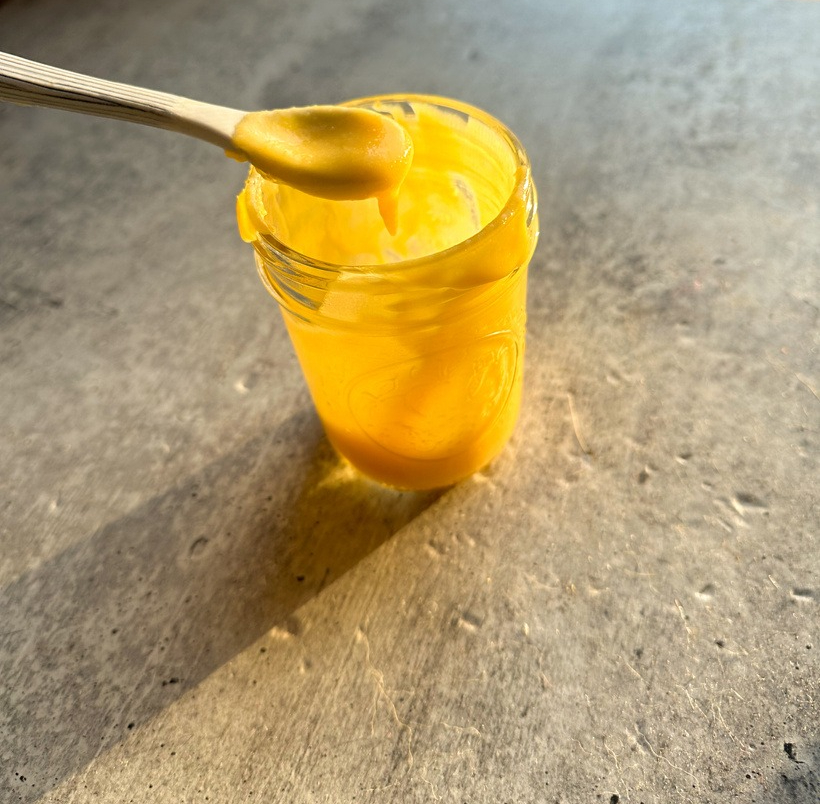
Meyer Lemon Curd with Spruce :
Ingredients:
1/3 cup lemon juice-I used Meyer lemons but regular lemons are perfect
Zest of 1-2 lemons
1/3 cup honey (can use another sweetener but the flavor will change)
1/4 cup or 1/2 stick butter of your choice
2 whipped eggs, room temperature
Optional: 1 Tbsp Spruce needles removed from the stem (always be 110% sure when harvesting spruce, fir or pine as there are deadly lookalikes)
Directions:
Combine all ingredients in a small saucepan and simmer and whisk for 6-8 minutes until it thickens.
2. Strain through a fine sieve and let it cool completely to thicken up.
Wishing you an easeful, nourishing turn towards the spring, even as we continue forward in the darkness of winter.